Modern cataract surgery lets you choose a lens matched to your lifestyle. Dr. Ravi Shah offers a full range of premium intraocular lenses at Eyecare Medical Group in Portland, Maine.
During cataract surgery, your clouded natural lens is replaced with a clear artificial lens called an intraocular lens (IOL). The lens you choose shapes how you'll see for the rest of your life: at distance, on the computer, and up close. There is no single "best" lens for everyone; the right choice depends on your eyes, your astigmatism, and how you like to spend your day. Below are the premium lenses Dr. Shah most often recommends. These same lenses are also used in Refractive Lens Exchange, lens-based vision correction for patients who want freedom from glasses before a cataract develops.
A non-diffractive extended depth-of-focus lens that delivers a continuous range of high-quality distance and intermediate vision (great for driving, computer work, and most daily tasks) with a nighttime glare-and-halo profile similar to a standard monofocal lens. Available in a toric version for astigmatism.
Range of Vision
A next-generation full-range-of-vision lens designed to provide a continuous range of clear vision from near to intermediate to distance, helping reduce dependence on glasses for reading, screens, and driving. A strong option for patients who want the broadest spectacle independence.
Range of Vision
An advanced monofocal lens that provides crisp distance vision with a bit more functional intermediate range than a standard monofocal, without increasing glare or halos. The toric design also corrects astigmatism at the time of surgery, for sharper, clearer vision in patients who want excellent distance vision with fewer compromises.
Range of Vision
Johnson & Johnson Vision's newest extended depth-of-focus lens, designed to deliver a smooth, continuous range of high-quality distance-to-intermediate vision with excellent image quality and a low incidence of visual disturbances. Dr. Shah's practice was the first in Maine to offer this advanced new lens.
Range of Vision
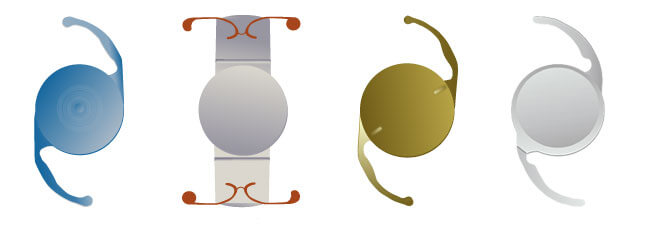
Your daily activities and visual priorities are the best guide to the right lens. Use this as a starting point; your consultation with Dr. Shah confirms the best match for your eyes.
If reading, screens, and distance all matter and you want the most freedom from glasses, a full-range lens like TECNIS Odyssey may be the best fit.
If sharp distance vision with the fewest nighttime glare and halos is your priority, an extended depth-of-focus lens like Vivity or PureSee is often ideal.
If you have astigmatism and want excellent distance vision with fewer compromises, the Eyhance Toric lens corrects astigmatism at the time of surgery.
As the first practice in Maine to offer TECNIS PureSee, Dr. Shah can offer the latest extended depth-of-focus lens for a smooth, continuous range of vision.
Premium IOLs are advanced lens implants used during cataract surgery to reduce dependence on glasses. Beyond the standard single-distance (monofocal) lens, premium options can provide a broader range of vision (distance, intermediate, and near) and can correct astigmatism. Dr. Shah offers a range of premium lenses at Eyecare Medical Group and helps each patient choose based on their eyes and lifestyle.
There is no single best lens for everyone. The right choice depends on your prescription, the health of your eyes, how much astigmatism you have, and your daily activities and visual priorities. Dr. Shah reviews these factors during a personalized consultation and recommends the lens best matched to your goals.
Standard cataract surgery with a monofocal lens is typically covered by Medicare and most insurance plans. Premium lens upgrades (extended-range, full-range-of-vision, and astigmatism-correcting toric lenses) are usually an out-of-pocket expense. The office reviews lens options and costs with you before surgery.
TECNIS PureSee is a newer extended depth-of-focus (EDOF) lens designed to provide a smooth, continuous range of high-quality distance-to-intermediate vision with a low incidence of visual disturbances. Dr. Shah's practice was the first in Maine to offer this advanced lens.
Yes. For patients with astigmatism, Dr. Shah offers toric lens options, including the Eyhance Toric lens, that correct astigmatism at the time of cataract surgery for sharper, clearer vision and less dependence on glasses.
The Light Adjustable Lens is an FDA-approved monofocal lens whose power can be fine-tuned with light treatments after surgery. Dr. Shah has made a deliberate decision not to offer the LAL at this time. Practicing at the leading edge also means being selective, adopting a new technology only when its real-world, long-term results clearly justify its trade-offs. With the LAL, those trade-offs include a single focal point (it does not provide the continuous range of vision of an extended depth-of-focus lens), the need to wear UV-protective glasses throughout the day until the lens is finalized, and several additional post-operative light-treatment visits. For most patients seeking greater freedom from glasses, Dr. Shah finds that today's premium EDOF lenses, such as TECNIS PureSee and Vivity, deliver an excellent range of vision more simply, and he prefers to let longer-term evidence mature before adopting the LAL.
Schedule a cataract and lens consultation with Dr. Shah at Eyecare Medical Group, serving patients across Maine.
Request Appointment